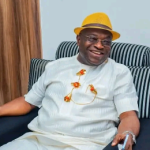
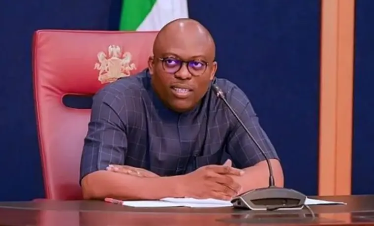


Just three months after President Bola Tinubu brokered a peace deal between the Minister of the Federal Capital Territory (FCT), Nyesom Wike, and his protégé, Governor Siminalayi Fubara, political tensions are mounting once again in Rivers State.
DAILY POST learned that members of the Rivers State House of Assembly, led by Speaker Martins Amaewhule and loyal to Minister Wike, are preparing for a renewed confrontation with the Governor.
The initial political conflict, which began in late 2023, stemmed from an intense power struggle between Fubara and Wike over control of the state’s political machinery. The dispute worsened in 2024 when the Amaewhule-led faction of the State Assembly joined the fray.
The crisis saw about 27 lawmakers loyal to Wike defect from the Peoples Democratic Party (PDP) to the All Progressives Congress (APC) on December 11, 2023. This was countered on July 6, 2024, when Fubara-aligned members declared the seats of the defected lawmakers vacant, significantly escalating the crisis.
The situation persisted until May 18, 2025, when President Tinubu declared a six-month state of emergency in Rivers State, suspending the Governor, his deputy, and the State House of Assembly. Peace was supposedly restored on July 27, 2025, when Tinubu personally met with Fubara, Wike, and Amaewhule at the State House to mediate an agreement.
New Signs of Conflict
The brewing crisis resurfaced barely three months later, on December 1, 2025, when Speaker Amaewhule publicly and vehemently criticized Governor Fubara’s administration, accusing it of neglecting public primary and secondary schools.
In a viral video, Amaewhule expressed that the decay in the oil-rich state’s public education system was “unacceptable and embarrassing.” He lamented the deterioration of public schools, noting that vandals have occupied the premises, and the lack of teachers forces pupils to learn without adequate instruction, sometimes with a single teacher covering two classes simultaneously.
Mass Defection Signals Crisis
On Friday, December 5, Amaewhule and 15 other members of the Assembly formalized another phase of the crisis by defecting from the PDP to the ruling APC, totaling 16 lawmakers making the switch. The defectors included Deputy Speaker Dumle Maol and several others from various constituencies.
Assembly Challenges Governor on Appointments
Further tension arose on the same Friday when the Assembly criticized Governor Fubara for his continued delay in submitting a list of commissioner-nominees for screening. The Assembly had previously urged the Governor to forward the list during its first sitting after the state of emergency was lifted in September 2025, to ensure effective governance. Fubara had earlier dismissed all commissioners appointed during the height of the crisis, following a Supreme Court ruling that declared their appointment process invalid. The failure to submit a fresh list has now provoked another confrontation.
Political Reactions
The Chairman of the African Democratic Congress (ADC) in Rivers State, Leader Sampson, warned all parties that the state cannot afford another crisis, urging the lawmakers not to compromise the lives of Rivers people for personal gain. He suggested that the earlier peace deal was motivated by selfish interests, stating, “We knew that the peace they achieved that time was for a selfish interest.” Sampson believes Amaewhule’s criticism of the schools was merely a pretext for their planned actions.
Similarly, PDP chieftain Austin Okai questioned why Governor Fubara was left behind by Wike’s political group despite the reconciliation. Okai accused Fubara of returning to a bad situation (“going back to his vomit”) and claimed that the Governor is now isolated, having been abandoned by his own supporters after Wike’s “train moved to the APC without carrying him along.”
About The Author