
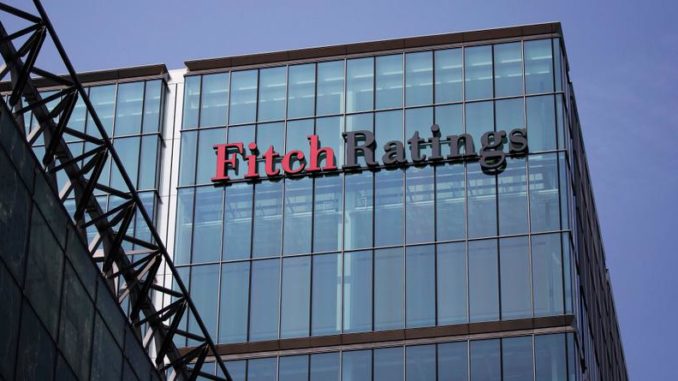


In light of recent policy changes and enhanced macroeconomic stability in Nigeria, Fitch Ratings has raised the Long-Term Foreign-and Local-Currency Issuer Default Ratings of Kaduna, Kogi, Lagos, and Oyo states from “B-” to “B.” Noting that the prognosis for all four states is still stable, the international ratings agency made the announcement on its website on Saturday. The rating action comes after Nigeria’s sovereign credit rating was raised from “B-” to “B” on April 11, 2025, according to Fitch. Given the federal government’s significant role in Nigeria’s intergovernmental fiscal structure, the agency clarified that the states have mirrored the sovereign rating improvement in accordance with its rating standards.
Because it controls the equalization mechanism implemented through a system of transfers to states, we believe that the Federal Government plays a dominant role in intergovernmental relations. Since Kaduna, Kogi, Lagos, and Oyo’s Standalone Credit Profiles match or surpass Nigeria’s ratings, the upgrading of their sovereign IDRs is reflected in the upgrade of theirs, according to Fitch. The organization attributed the updated estimates for the four states to a number of important factors. These include a greater depreciation of the naira, estimated to approach N1,500 to the dollar between 2024 and 2028, and a tendency of high but steadily reducing inflation.
Additionally, it said that federal VAT and oil-related transfers to the states increased by more than 20% in 2024, giving the governments vital financial support. Fitch cautioned, however, that governments with significant external debt exposure face increased debt payment risks as a result of the naira’s dramatic decline. According to a research by Fitch, Kaduna State was exposed to substantial currency risk because 86% of its direct debt at the end of 2023 was denominated in foreign currencies. The agency predicts that the state’s payback ratio will be high at around 18 times, indicating insufficient debt servicing capacity, even though Kaduna enjoys solid operating margins of over 40%, which are fueled by growth in domestically produced revenue and higher federal contributions.
For Kogi State, Fitch said its debt mix between domestic and foreign borrowings is largely tied to ambitious capital expenditure projects.
The state’s payback ratio is projected to remain around 20 times over the medium term, with the agency highlighting Kogi’s vulnerability to oil revenue fluctuations that could impact fiscal balances.
In Lagos State, despite having 50 per cent of its direct debt in foreign currencies, Fitch projects a far stronger fiscal position. Lagos’s payback ratio is expected to remain robust at around five times by 2028, underpinned by its exceptional internally generated revenue, which accounts for 75 per cent of its total operating revenue compared to the national average of 25 per cent. The state is also expected to record a budget surplus in 2024.
Oyo State is less vulnerable to foreign exchange risk because its debt profile is primarily in local currency. With an increase in federal transfers, Fitch anticipates that its payback ratio will remain below nine times. However, Oyo’s dependence on oil earnings and its inferior secondary fiscal indicators continue to raise worries.Fitch also assessed environmental, social, and governance risks across the states. Kaduna, Kogi, and Oyo each received an ESG Relevance Score of 4 for Biodiversity and Natural Resource Management, reflecting their dependence on oil revenues. Kaduna faces additional ESG-related challenges, including low energy management efficiency, ongoing ethnic conflicts impacting civil rights, below-average human development indicators, and a significant population living in poverty.
The agency further noted that Lagos State’s Standalone Credit Profile is assessed at ‘b+’, reflecting a vulnerable risk profile and strong financial metrics at the upper end of the ‘aa’ category.
However, its overall rating remains capped by Nigeria’s sovereign ceiling. Meanwhile, Kaduna, Kogi, and Oyo states maintain ‘b’ SCPs, characterised by vulnerable risk profiles and financial metrics between the ‘a’ and ‘bb’ range.
Fitch concluded that although external risks persist, the overall financial profiles of the four states have strengthened in line with the broader improvement in Nigeria’s macroeconomic fundamentals.
The Governor of Lagos State, Babajide Sanwo-Olu has hailed the recent upgrade of Lagos State’s credit rating by Fitch Ratings, describing it as a testament to the strength of his administration’s policies and execution.
In his response, he emphasised that the upgrade is not only a recognition of past achievements but also a call to remain committed to even greater action moving forward.
“This is a good verdict on our performance in terms of policy decisions and project execution. It is also a call for us to be more active; we will be in every sector. I thank Lagosians for their support,” Sanwo-Olu said.
Sanwo-Olu further explained that the state’s ability to weather economic challenges, despite external factors like currency fluctuations, is rooted in its strong financial standing.
He noted that by the end of 2023, 50 per cent of Lagos State’s direct debt was denominated in foreign currencies, exposing it to currency risks. However, Fitch projects that the state will maintain a strong payback ratio of five times by 2028, reinforcing the state’s ability to service its debt obligations.
By the end of 2023, half of Lagos State’s direct debt was in foreign currencies, according to the agency, indicating a significant vulnerability to exchange rate swings. Nevertheless, Fitch predicts that by the end of 2028, Lagos’ payback ratio would still be robust at almost five times,” he continued. He underlined his administration’s commitment to sustainable economic development, stressing that the state will continue to prioritize projects that create long-term growth and investment
About The Author