
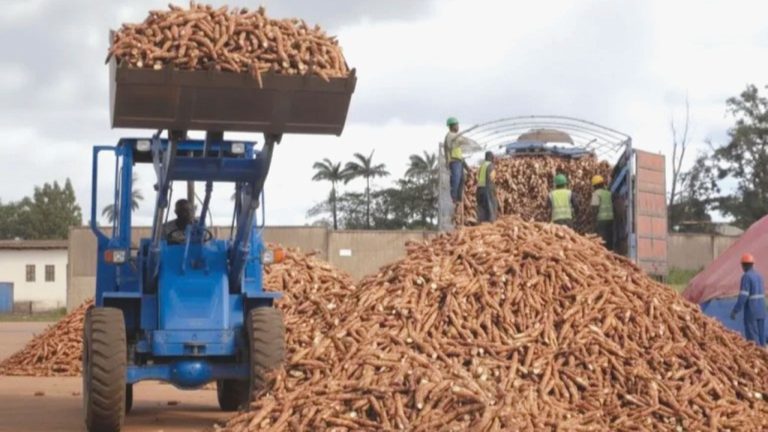


By utilising its abundant cassava resources and bolstering agro-industrial systems, Nigeria can reverse its estimated 300–350 million litres of ethanol imports annually, according to insights from the Nigeria Cassava Investment Accelerator (NCIA), an initiative of Lagos Business School Pan-Atlantic University.
Based on data from the National Agricultural Extension and Research Liaison Services, NCIA found that although Nigeria produces more than 60 million tonnes of cassava annually, the country’s ethanol demand was approximately 400 million litres in 2024, with about three-quarters coming from imports.
The report emphasised that setting up dependable supply chains for cassava is the first step towards import substitution. The current spot-market system cannot ensure consistent volumes of cassava delivered to specification, which is necessary for industrial ethanol production.
The creation of coordinated logistics systems, aggregation centres, and organised outgrower networks was advised by NCIA. Through staggered planting throughout Nigeria’s various agroecological zones, these would guarantee a consistent supply throughout the year.
According to NCIA, Nigeria would have to convert between 1.8 and 2.0 million tonnes of cassava per year—roughly three percent of the country’s total production—into ethanol in order to replace imports.
But doing so necessitates a large investment in processing infrastructure. Cassava production is more capital-intensive than sugarcane molasses because it requires starch extraction and enzymatic conversion prior to fermentation.
According to the report, plants need to run at high utilisation rates in order to stay profitable, and cost competitiveness depends on energy use and conversion process efficiency.
NCIA emphasised current industry developments as evidence of viability. Through integrated farming and processing, including outgrower programmes and new facilities, Nosak Group is growing its cassava-to-ethanol operations.
According to the report, these investments show that obtaining local feedstock can lessen exposure to import disruptions and foreign exchange volatility.
Aligning production with particular market segments is another important suggestion. Nigeria’s demand for ethanol includes fuel blending, pharmaceuticals, cosmetics, and beverages.
Strict certification and quality standards apply to every segment. In order to ensure consistent offtake and pricing stability, NCIA advises operators to identify target markets early on and design production systems that adhere to those standards.
The significance of enhancing project economics through by-products was also emphasised in the report. Fermentation residues can be processed into animal feed, while captured carbon dioxide can be sold for beverage production.
The financial sustainability of ethanol plants can be greatly improved by these extra sources of income.
Scaling domestic ethanol production, according to NCIA, will necessitate supportive policy frameworks, such as agro-processing incentives, infrastructure development, and access to long-term financing specifically designed for industrial agriculture.
Unambiguous regulations pertaining to fuel ethanol blending may also promote investment in large-scale production and increase demand.
Nigeria’s reliance on imported ethanol, according to NCIA, is a result of poor industrial coordination rather than a shortage of raw materials. A tiny portion of cassava production could supply a sizable portion of the country’s ethanol needs if the proper systems were in place.
According to the report, the opportunity is a change from agricultural abundance to industrial capability, which could increase rural incomes throughout the value chain, stabilise supply, and lessen reliance on imports.
About The Author