
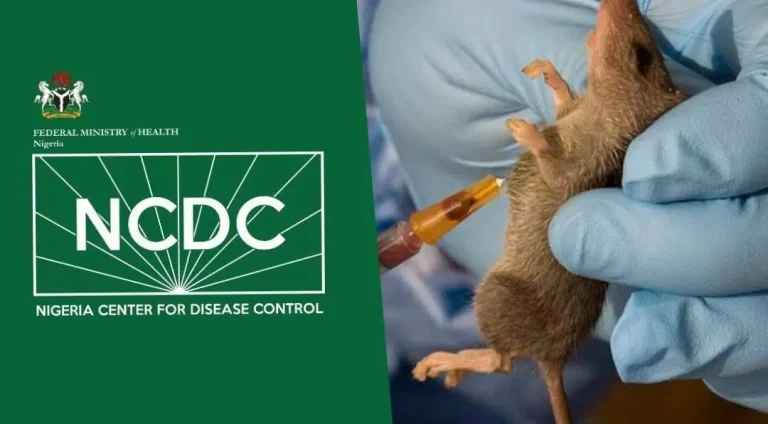


Lassa fever continues to spread throughout states, resulting in more deaths and new confirmed cases, according to the Nigeria Centre for Disease Control and Prevention, or NCDC.
In its most recent situation report for Epidemiological Week 23, June 2–8, 2025, the NCDC revealed this on Wednesday on its official website.
The organization reports that out of 758 confirmed Lassa fever cases this year, Nigeria has reported 143 fatalities.
Compared to the 17.8% observed during the same period in 2024, this corresponds to a case fatality rate (CFR) of 18.9%.
Additionally, the NCDC reported that there were 11 new confirmed cases during the reviewed week, compared to eight the week before.
The states of Ondo, Edo, Bauchi, and Taraba were the sites of the new cases.
At least one Lassa fever case has been confirmed in 18 states and 96 Local Government Areas in 2025.
However, only five states accounted for 90% of all verified cases: Ondo 31%, Bauchi 25%, Edo 16%, Taraba 15%, and Ebonyi 3%, according to the report.
With a median age of 30, the agency reported that young individuals between the ages of 21 and 30 were still the age group most impacted.
Additionally, it revealed one new illness among healthcare professionals during the reporting week, increasing the total to 23 afflicted health workers in 2025.
The NCDC determined that a number of factors, such as delayed case presentation, poor health-seeking behavior, high treatment costs, poor sanitation, and low awareness in impacted regions, were contributing to the outbreak.
The agency said it has deployed 10 Rapid Response Teams to states with the highest load and launched a multi-sectoral Incident Management System to stop the spread and lower the number of fatalities.
The introduction of the Infection Prevention and Control (IPC) e-learning platform, community sensitization campaigns, environmental response interventions, media outreach in coordination with stakeholders, and case management training for health staff were additional response measures.
Nigerians were advised by the NCDC to practice good hygiene, seek medical help as soon as they experience symptoms, and stay away from rats and their droppings, which are known disease vectors.
Lassa fever is a viral hemorrhagic disease that is mainly spread by coming into contact with the urine or feces of sick rats, according to the DAILY POST.
About The Author