
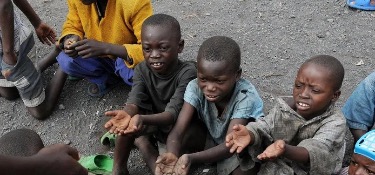


An international non-governmental organization, Save the Children International, recently released a study warning that over 96,000 children in six northern Nigerian states face the risk of death from malnutrition before the end of 2025. This report, which highlights the failure of governments to provide for their citizens, has caused significant public concern. The organization, collaborating with partners including PLAN, Action Against Hunger in Nigeria, and OXFAM, predicted a severe public health emergency due to malnutrition in the following states: Adamawa, Borno, Katsina, Sokoto, Yobe, and Zamfara. At a press conference in Abuja, the organizations drew attention to the escalating rates of acute malnutrition, cautioning that the situation would become catastrophic within months if the affected states failed to take immediate corrective measures. Duncan Harvey, the Country Director of Save the Children International, specifically told journalists that without prompt access to life-saving treatment, 96,000 children could die between October and December 2025 due to acute malnutrition. The severity of this figure suggests that over 1,000 children could be dying daily. Additionally, the organizations revealed that approximately 800,000 pregnant and breastfeeding women in the same six states are also at risk of acute malnutrition. Harvey described the situation as a nationwide emergency caused by surging food insecurity and malnutrition, noting that over 31 million people are facing acute food insecurity in 2025, which makes it the largest food crisis globally. He stated that about 5.4 million Nigerian children suffer from acute malnutrition, and 3.5 million children under five have Severe Acute Malnutrition (SAM), with 1.2 million requiring immediate life-saving care. He predicted that between October and December 2025, an estimated 600,000 children under five would be at risk of SAM in the six northern states, in addition to the over 800,000 at-risk women. Harvey referred to the 2010 declaration by the African Union Heads of State of October 30 as Africa Food Security and Nutrition Day, emphasizing that “Hunger is not just a risk; it’s a crisis of rights. Food security and nutrition must be treated as non-negotiable for child survival, growth and future productivity.”
In response, Thierno Samba Diallo, Country Director of Action Against Hunger Nigeria, proposed that funding should be allocated for essential nutrition commodities, such as the locally produced and effective Ready-to-Use Therapeutic Food (RUTP) and Therapeutic Milk. He stressed the importance of long-term funding and integrated approaches that connect humanitarian aid, peace-building, and development efforts to achieve sustained security and nutrition. Diallo highlighted that severe malnutrition causes irreversible damage to physical growth, cognitive development, and economic productivity, all of which are vital for national human capital, asserting that all possible efforts must be made to prevent it. He suggested expanding targeted support for the 800,000 at-risk pregnant and breastfeeding women, adopting shock-responsive social safety nets, and scaling up food assistance, nutrition treatment, and livelihood support. He also advocated for encouraging the local production of fortified foods and strengthening collaboration on response strategies. Dr. Helen Idiong, Director of Programme Quality and Influencing at PLAN International, urged the affected states to join forces with relevant stakeholders to combat malnutrition and provide life-saving assistance to vulnerable families and communities. She submitted that “Hunger is not just a lack of food. It’s a violation of dignity, health and the right to the future,” and implored federal and state leaders, along with international partners, to act immediately, since these crises are preventable and treatable.
Since the report’s release, discussions have centered on the underlying causes and preventative measures. Some argue that further investigations would reveal that more states, including those in the South, face similar dangers, specifically pointing to North Central states like Benue (the nation’s food basket), Plateau, Niger, Kogi, and parts of Kaduna State. Proponents of this view argue that the pervasive violence caused by kidnappers and militant herdsmen in the North Central regions makes a severe food crisis predictable. They are urging the government to act decisively to prevent this impending tragedy. A key solution widely supported by Nigerians to avert hunger and subsequent malnutrition is for the government to aggressively address the insecurity crisis so that farmers can safely return to their land and produce food. Dr. Pogu Bitrus, President of the Middle Belt Forum (MBF), strongly supports this call for decisive government action against terrorism, banditry, and kidnapping to create a secure environment for farmers. He believes the government alone has the power to prevent the looming crisis by tackling insecurity directly. Bitrus suggested that the reality of the situation is self-evident and that the international organization might even be under-reporting the crisis’s gravity. He stated, “We know it is a reality because banditry has reached a stage where farmers can’t go to farm, and if farmers can’t go to farm, naturally, there won’t be food to eat.” He warned that the crisis would likely affect more than just the six states listed.
Abdullahi Umar, an educationist in Maiaduwa Local Government Area of Katsina State, concurred with the report, noting that while the Zamfara, Sokoto, and Katsina regions traditionally experience seasonal food shortages around June/July due to planting, the current insecurity has made food scarcity an all-year-round problem. He explained that farmers are prevented from working their land by terrorists and bandits, which, coupled with the high cost of living exacerbated by the removal of the fuel subsidy, inevitably leads to acute food shortages. He sees the report as a “wake-up call” for the government to take proactive steps to prevent avoidable deaths. His long-term solution is for the government to wage total war on bandits and kidnappers to clear forests and allow farmers to safely return. In the interim, he recommended that the affected state governments should provide food and children’s supplements to impoverished families.
Nnanna Nwkamma, a lawyer and public affairs commentator, asserted that the necessary conditions for food availability are a secure environment for farmers and the implementation of people-oriented economic policies instead of the current “strangulating” ones. While acknowledging insecurity as a factor, he emphasized that the government’s economic policies are a major contributor to the acute food shortage. He cited the fuel subsidy removal and excessive taxation as policies that have severely increased hardship, noting that many families barely feed once a day. He also mentioned the exorbitant cost of baby food, stating that a can of NAN baby food that once sold for just over N1,000 now costs N10,000 or more, questioning how households can afford this necessary nutrition. He concluded that the government must take two immediate and crucial steps: first, provide food and children’s supplements to poor families in the affected states at minimal or no cost; and second, declare a total war against “enemies of state” to rout them out and allow farmers to return to their fields in peace, ensuring both food security and economic viability.
About The Author