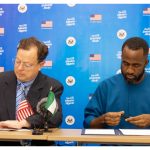



Nasir El-Rufai, the former governor of Kaduna State, has finally been arraigned by the Department of State Services (DSS) on a five-count amended charge that borders on an alleged breach of national security.
El-Rufai, however, entered a not guilty plea to each count when he was arraigned before Justice Joyce Abdulmalik of the Federal Highway Court in Abuja.
However, Aladedoye informed the court that on April 13, 2026, a second amended five-count charge was filed.
The attorney asked the court to replace it with the previous charge of three counts.
El-Rufai’s attorney, Oluwole Iyamu, SAN, responded by stating that he had received the amended charge and was not objecting.
The previous three-count charge was then dismissed by the judge.
The former governor entered a not guilty plea after the counts were read to him, and Aladedoye requested three consecutive dates for the accused person’s trial.
He argued that it might be challenging to reach the defendant during the three days of the trial because he had been detained by the Independent Corrupt Practices and Other Related Offenses Commission (ICPC).
The three days might not be the best option for them, he said.
Iyamu also told the court about their February 17, 2026, bail application.
However, the judge put the case on hold so Iyamu could take the necessary action because the additional affidavit supporting the bail application was not in the court file.
A further affidavit was discovered upon the case’s resumption.
According to the DSS, it did not object to the bail request.
The prosecution then filed a request for an order to hide the identities of two witnesses who were scheduled to testify.
The DSS asked that pseudonyms be used during the trial and that the witnesses’ identities not be disclosed in public court records.
The prosecution contended that El-Rufai sympathizers might attack the witnesses’ families.
Through an application, letter, and additional affidavit, the defense contested the request and asked the court to reject it. It emphasized that an accused person has a constitutional right to know who has accused him.
The defense further argued that the prosecution’s allegations of El-Rufai’s cult-like followership or hatred were unsupported by any evidence presented to the court.
The defense attorney stated that the defendant had devoted his life to serving the public and cautioned that granting a general anonymity order could seriously harm the accused.
The DSS requested that the witnesses’ identities not be revealed in public court records and that pseudonyms be used throughout the trial.
El-Rufai supporters could attack the witnesses’ families, according to the prosecution.
The defense challenged the request and requested that the court reject it through an application, letter, and additional affidavit. It underlined that the right of an accused person to know who has accused him is guaranteed by the constitution.
The defense further contended that no evidence was presented to the court to support the prosecution’s accusations of El-Rufai’s hatred or cult-like followership.
The defense lawyer said that the defendant had dedicated his life to serving the public and warned that the accused could suffer grave consequences if a general anonymity order was granted.
About The Author