
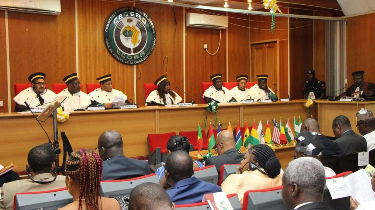


The Association of Igbo Town Unions (ASITU) has escalated its grievances to global and regional bodies, including the United Nations Human Rights Council, the African Commission on Human and Peoples’ Rights, and the ECOWAS Court of Justice. The subject of their petition is the “systematic demolition” of properties owned by Igbo traders and investors in Lagos State.
Speaking to journalists in Umuahia, Abia State, ASITU National President, Chief Emeka Diwe, condemned what he views as the persistent targeting of Igbo-owned businesses and structures, characterizing the actions as “economic cleansing.”
Diwe expressed concern that Nigeria is suffering from “the cancer of ethnic discrimination and selective justice,” alleging that government institutions are failing to uphold the principles of equality and fairness.
Accompanied by members of ASITU’s national executive council from various Igbo communities, Diwe explained that the international petition was filed following several failed attempts to engage with Nigerian authorities regarding their documented complaints. He stated, “We have not lost faith in Nigerian institutions, but they have consistently failed to respond… That is why we have turned to regional and international bodies for intervention.”
The ASITU president rejected the Lagos State Government’s defense that the demolished buildings were illegally constructed on waterways, calling it a false justification intended to conceal deeper ethnic biases. Diwe maintained that the properties were legally acquired and approved by the appropriate agencies. He argued that such demolitions “send a disturbing message to investors, that property rights in Nigeria are insecure and that ethnicity may determine how justice is applied.”
He contended that destroying legitimate businesses not only discourages investment and threatens job creation and economic stability but also damages Nigeria’s international standing as a country that respects the rule of law.
ASITU claimed that most property owners received demolition notices only a few days before enforcement, which prevented them from seeking legal recourse. The group also accused officials of ignoring valid approval documents presented by the affected traders. According to Diwe, “Many of these buildings had valid permits issued by the same Lagos State Government that later tore them down. This is not law enforcement. It is the deliberate erasure of livelihoods and a violation of constitutional guarantees of equality and justice.”
While urging affected members to remain composed and law-abiding, ASITU advised the Igbo business community to heed the philosophy of Aku Ruo Ulo (“let wealth return home”) by re-directing some of their wealth to the South-East to foster local economic independence, job creation, and dignity.
Diwe concluded by clarifying that the association’s pursuit of justice is a demand for fairness, mutual respect, and equal treatment for all ethnic groups in Nigeria, not an agitation for secession.
About The Author