
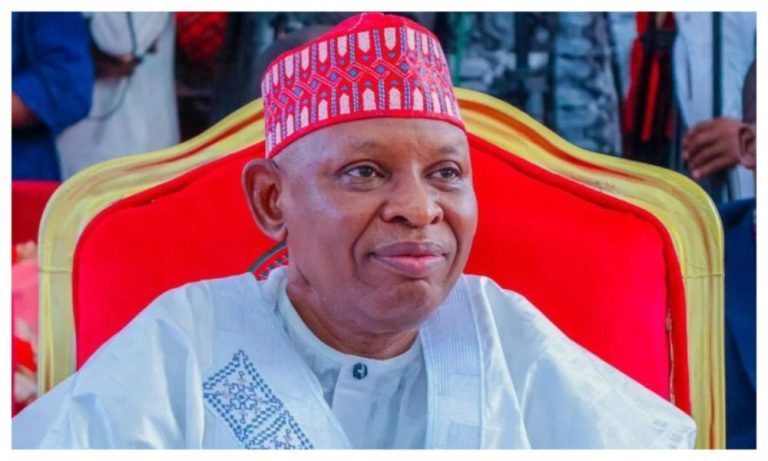


Abba Kabir Yusuf, Governor of Kano State, has announced renewed commitment to worker welfare, pension settlement, and civil service reforms as Nigeria joins the world community in commemorating Workers’ Day.
Speaking during Kano’s May Day celebration, the governor stated that his administration is committed to ensuring fairness and dignity for both serving workers and retirees, emphasizing that the government is prioritizing the resolution of outstanding pension liabilities.
“It is in the interest of equity and fairness that we are able to settle all debt obligations to our retirees who have served the state faithfully,” he stated.
It is in the interest of equality and fairness that we can fulfill all debt obligations owed to our pensioners who have dutifully served the state,” he stated.
“This administration is committed to upholding the rights and dignity of workers.”
He stated that the state has maintained continuous salary payments and introduced what he characterized as a progressive wage strategy, claiming that Kano is one of the first states to adopt the new N71,000 minimum wage structure.
According to him, the policy is a response to current economic demands on workers, as well as a larger endeavor to enhance living conditions.
“We have maintained prompt and full payment of salaries and taken bold steps to improve workers’ welfare,” he stated.
The governor also mentioned structural improvements in the civil service, such as the formation of the Local Government Service Commission, which he claims has improved career advancement and harmonised standards across the public sector.
On retirement benefits, he revealed that the state’s minimum pension has been doubled from N5,000 to N20,000, describing the measure as a significant intervention to improve the welfare of elderly residents.
“We have demonstrated our commitment not only in words but through concrete action,” he said.
He also discussed ongoing capacity-building programs for civil officials, such as information technology, artificial intelligence, financial management, anti-corruption procedures, and leadership development.
The state’s minimum pension has been doubled from N5,000 to N20,000, a significant measure to improve the welfare of elderly residents. “We have demonstrated our commitment not only in words but through concrete action,” he stated.
He also talked about ongoing capacity-building programs for civil authorities, such as information technology, artificial intelligence, financial management, anti-corruption processes, and leadership training.
About The Author