
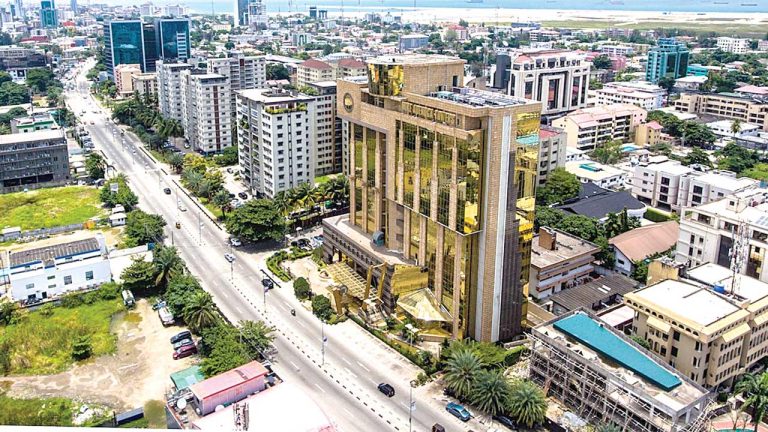


According to the most recent State of Lagos Housing Market Report, which highlights the worsening housing crisis in Africa’s largest city, over 70% of Lagos residents are still tenants, and between 40 and 60 percent of their income is spent on rent.
According to the survey, rental pressure is particularly high in wealthy neighborhoods like Lekki, Ikoyi, and Victoria Island, where luxury apartment prices and property values are still rising in spite of general economic challenges.
The third edition of the biennial report, which was commissioned by the Roland Igbinoba Real Foundation for Housing and Urban Development, or RIRFHUD, presents a nuanced picture of the Lagos real estate market.
The low-income housing sector is still largely neglected and underfunded, despite the boom in luxury constructions and short-term lodgings, which are mostly being driven by diaspora finance and developers aiming to attract high-net-worth individuals.
The research, which was unveiled at a Victoria Island event, is the most thorough of its sort to date and is based on field data, property analytics, and satellite images. It is anticipated to have an impact on future investment and urban housing policy in Lagos, building on the groundwork established by previous editions published in 2009 and 2016.
The report’s conclusions include a notable growth in the state’s housing shortfall, which increased by 15% from an expected 2.95 million units in 2016 to 3.4 million units in 2025. This increase highlights the widening gap between the state’s real demand for affordable housing and the supply driven by the private sector.
Despite having severe housing shortages, high-demand areas like Ikorodu, Badagry, and Alimosho continue to see little new residential development.
In spite of persistent economic uncertainty and rising construction costs, real estate values surged by 12% annually.
Meanwhile, yields on short-let and serviced apartments surged by 15 to 18 percent in premium neighbourhoods, even as affordability concerns caused rising vacancy rates on the mainland.
Persistent infrastructure deficits, particularly in drainage, electricity, and road networks, continue to limit the liveability and investment appeal of many residential zones.
“The market is saturated with luxury apartments, but the middle class is being priced In order to close the growing housing gap, the report called for reduced procedures and increased public-private cooperation, pointing out that “these bureaucratic hurdles are stalling private investment and slowing the pace of new housing delivery.”out,” one respondent was quoted as saying in the report.
Administrative and regulatory challenges also featured prominently in the findings. Developers cited inefficient land titling processes, high documentation costs, and delays in securing permits, factors that can add 15 to 20 percent to housing development expenses.
About The Author