
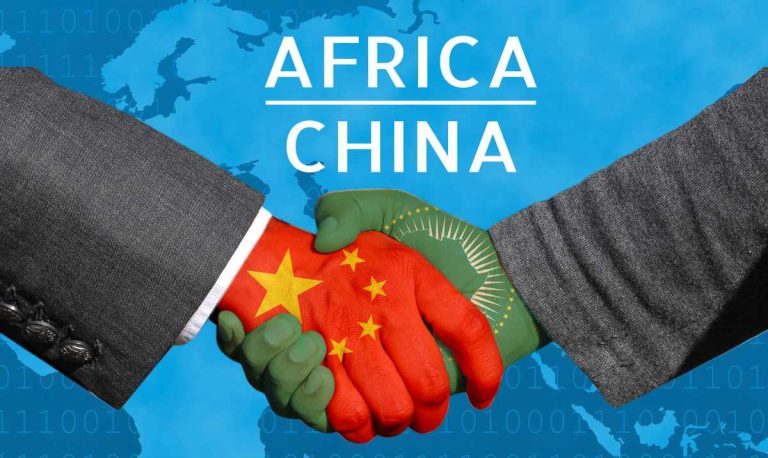


A well-known African proverb states, “There is no better mirror than a true friend.”
When evaluating the long-standing partnership between China and Africa, this adage is highly appropriate. This is due to the partnership’s foundation of respect and understanding, which dates back more than 70 years.
China currently has diplomatic ties with 53 of the 54 African countries. China, under the leadership of President Xi Jinping, made yet another move toward expanding economic cooperation with African nations while supporting the realization of the African Union’s Agenda 2063 as part of its ongoing efforts to establish friendships with its African allies.
President Xi announced a significant extension of China’s zero-tariff policy for the 53 African countries that have bilateral links with China on February 14, 2026, at the 39th African Union Summit. With effect from May 1, 2026, all goods from the 53 African nations were to receive 100% zero-tariff status.
However, the new policy expands on earlier, more restricted tariff exclusions given to 33 least-developed countries (LDCs) in Africa, which went into effect on December 1, 2024.
Tariffs are essentially levied by a nation on commodities imported from another nation.
A GROWTH OPPORTUNITY FOR AFRICA
This admirable initiative’s primary goal was to promote African industrialization and increase access to exports of African manufactured goods, raw materials, and agricultural products to the 1.4 billion-person Chinese market.Additionally, the effort promotes competition and diversity for African nations to advance along the value chain, from raw material production to final product manufacturing.
According to experts, the zero-tariff treatment will greatly accelerate the industrial development and transformation of African nations while providing incentives for homegrown businesses that might compete in global markets. Additionally, they think that the new tariff policy will minimize the growing trade gap between China and Africa by promoting African exports to China.
According to some experts, “it is also certain that African exporters will take advantage of the zero-tariff treatment to have fewer trade barriers and more competitiveness in the market.”
It is important to remember that China has been Africa’s biggest trading partner for 17 years running. In 2025, trade volume reached a record $348 billion, representing a 17.7% year-over-year growth. According to available data, African exports to China totaled $123 billion in 2025, whereas Chinese exports to Africa totaled $225 billion, resulting in a significant deficit for Africa.
Sale works as a Global South Affairs Analyst in Abuja. (lawalmaida1@yahoo.com)
According to empirical data, Nigeria, Egypt, and South Africa are the top African importers of Chinese commodities, while Zambia, Guinea, South Africa, the Democratic Republic of the Congo, and Angola are the top exporters of African goods to China.
Nigeria (cashew nuts, sesame, ginger, pepper, and cocoa), Ethiopia (coffee, leather, and tea), Kenya (tea, avocado, horticulture, and leather), Uganda (coffee and other agricultural products), and Côte d’Ivoire (cocoa and other agricultural products) are among the African nations and goods that stand to gain the most from the zero-tariff arrangement.
To maximize the policy’s long-term benefits and lessen the long-standing trade deficit between China and African countries, experts advise African exporters to develop high-value goods that will appeal to the sizable Chinese market.
It is admirable that China is the only significant world economy that has dared to offer full tax-free access to products from Africa.
CHINA-AFRICA COOPERATION DEVELOPMENT CATALYST:
All 53 African nations with relations to China are members of the Forum on China-Africa Cooperation and the Belt and Road Initiative, two larger initiatives that include China’s zero-tariff policy on African goods to China.
Economic experts also see the tax-free arrangement as a deliberate attempt by Beijing to promote shared development, increase South-South trade integration, and bolster Global South cooperation.
Although official ties and diplomatic contacts have existed between China and Africa for millennia, they only started roughly 70 years ago. Since then, the two countries’ fraternal relations have advanced at a rate never seen before, with China fully endorsing the development and prosperity of Africa. Mutual respect and understanding have been the cornerstones of this amazing relationship, especially in these challenging times. The Global Development Initiative (GDI), Global Security Initiative (GSI), Global Civilization Initiative (GCI), and Global Governance Initiative (GGI) are among China’s four people-centered development projects that both sides fervently support.
The Forum on China-Africa Cooperation (FOCAC) celebrated its 25th anniversary of founding in 2025. In order to promote closer political, economic, and social relations, Chinese and African leaders established the forum in 2000 as a forum for group discussion and practical cooperation. Since then, it has grown to be an important tool for strengthening ties between China and Africa, producing better outcomes in the fields of infrastructure development, financing, and economic growth. It is important to acknowledge that China continues to be Africa’s biggest trading partner
A CHANGE IN THE GAME FOR NIGERIA:
Unquestionably one of Africa’s biggest economies, Nigeria stands to gain a great deal from China’s zero-tariff policy. Since Nigeria and China established diplomatic ties 55 years ago, their bilateral collaboration has grown to previously unheard-of levels, especially in recent years.
Nigeria has grown to become China’s top engineering contracting partner in Africa, its second-largest export market, its third-largest trade partner, and a significant investment destination on the continent.
Bilateral trade between the two most populated nations in the world and in Africa exceeded $28 billion as of 2025, demonstrating an impressive development trajectory. Nigeria was among the first countries in Africa to accept Renminbi (RMB), a form of Chinese currency, for transactions involving their foreign reserves.
Nigerian President Bola Tinubu and Chinese President Xi released a joint declaration on the development of a high-level China-Nigeria community with a shared future during Tinubu’s state visit to Beijing in September 2024. Nigerian cashew exports to the Chinese market were one of the other agreements made in Beijing.
Therefore, astute economists think that China’s zero-tariff policy will be a practical game-changer for Nigeria’s export industry. They contend that while increasing commerce in manufactured and agricultural items, the approach will greatly diversify Nigeria’s exports beyond crude oil.
Nigerian goods including cashew, ginger, sesame seeds, cocoa, and cassava are likely to draw in Chinese consumers. Additionally, the program is anticipated to increase Nigeria’s domestic manufacturing while easing the shift of the nation’s exports to China from mostly raw materials to produced goods of high quality.
Nigerian goods will be able to establish a more robust brand image under the new circumstances, both in Chinese and international markets.
However, experts maintain that Nigerian exporters must make a concerted effort to adhere to the high quality criteria set by the Chinese government and market in order to fully reap the benefits of the zero-tariff policy.
.
About The Author