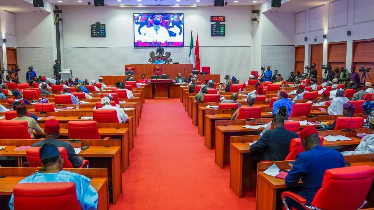


A recent finding by the Senate’s ad-hoc committee investigating crude oil theft in the Niger Delta—that roughly N300 billion in crude oil revenue is unaccounted for—has triggered public reactions in Nigeria.
The committee’s preliminary report to the Senate highlighted significant inconsistencies, weak control systems, and systematic failures that have allowed for large-scale theft of Nigeria’s crude oil income.
A detailed review of domestic and tax crude oil proceeds showed differences, mismatches, and missing funds, totaling about $22 billion. The report also identified an $81 billion difference between the revenues declared by the Nigerian National Petroleum Company Limited (NNPCL) and those recorded by the Central Bank of Nigeria (CBN) for 2016 and 2017.
The committee further claimed that its review of crude oil sales from 2015 to the present, supported by international consultants, estimated that over $200 billion in crude oil proceeds globally remain unaccounted for.
The interim report, which followed months of reviews, submissions, and hearings, linked the problem to flawed measurement systems, inadequate regulatory oversight, and poor cooperation among government agencies.
It identified unverified measuring tools, lack of quality control, ineffective collaboration between agencies, and uncoordinated enforcement as the main factors enabling crude oil theft.
However, the report criticized the suspension of the Weights and Measures Department’s upstream activities under the Petroleum Industry Act (PIA) 2021, arguing that the decision harmed accountability and accurate measurement in crude oil operations.
It also noted that the absence of a specialized court to prosecute oil thieves and the failure to implement the Host Communities Development Trust Fund (HCDTF) under the PIA have fueled persistent sabotage and theft in oil-producing areas.
The committee estimated the unaccounted domestic crude proceeds to be about N300 billion, urging immediate efforts to track, trace, and recover stolen crude oil funds both locally and internationally for the country’s benefit.
It called on the Federal Government to require the Nigerian Upstream Regulatory Commission (NUPRC) to enforce international crude oil measurement standards at all production and export sites or reinstate the regulatory role of the Weights and Measures Department.
They also urged the government to equip security agencies with modern surveillance technology and equipment, including drones, to enhance real-time monitoring of oil facilities and detect theft and leaks.
The committee recommended creating a Maritime Trust Fund to support the development of maritime infrastructure, training, and safety, as well as establishing a special court to quickly prosecute crude oil thieves and their collaborators.
It further advised the immediate implementation of the HCDTF to reduce community sabotage and promote local involvement in managing oil resources.
Beyond financial losses, the committee also expressed worry about the rising number of abandoned and improperly decommissioned oil wells in the Niger Delta, which are leaking oil and gas into the environment and polluting communities.
It suggested that these wells should be transferred to the NUPRC for handover to modular refineries to increase local crude availability and reduce vandalism.
The committee did note a small recovery in crude oil production, which grew by 9.5 percent in 2023, from 490.95 million barrels in 2022 to 537.57 million barrels, indicating improved production and security conditions.
The Committee, reconstituted on February 11, 2025, after the death of its former chairman, Senator Ifeanyi Ubah, asked the Senate for authority to track, trace, and recover stolen crude oil proceeds worldwide.
It emphasized that recovering these funds is essential for restoring accountability in the oil sector, improving Nigeria’s financial stability, and discouraging future theft.
However, while praising the committee’s work, the Senate clarified that fund recovery is not its duty. It directed the committee to complete its investigation and name the thieves, after which its recommendations would be sent to the executive branch for action.
Reactions to the revelations have been a mix of anger, disappointment, and silence, alongside calls for drastic actions to prevent future financial misconduct.
Those expressing anger and disappointment believe the report only confirms the long-known, deeply rooted corruption in the oil sector.
A key figure in this group, oil industry analyst Idowu Christopher, stated the government knows who is involved in oil theft but refuses to act.
He asked if anyone was surprised by the report, stating the government knows the source of the problem but failed to address it. He also questioned the practice of individuals owning oil wells, calling it an “abnormality” in Nigeria.
Christopher supported the committee’s recommendation to recover these oil wells and transfer them to the NUPRC, which would then hand them over to modular refineries to boost local supply and curb vandalism.
He also questioned the non-implementation of the HCDTF, which has been linked to persistent sabotage, concluding that the government should be held accountable for the failure to track such vast unaccounted funds due to its deliberate inaction.
Another analyst, Chikia Umeayo, a legal practitioner, saw no reason for anger or disappointment, as such developments have become typical in Nigeria.
He continued, saying he and others have raised these issues for years without results. He stated he has chosen to remain silent because the government is unwilling to act.
Umeayo concluded, “I no longer bother myself about some of these reports because at the end of the day, nothing will come out of it. Absolutely nothing; so why should I be angry or disappointed over something I know will keep happening?”
About The Author