
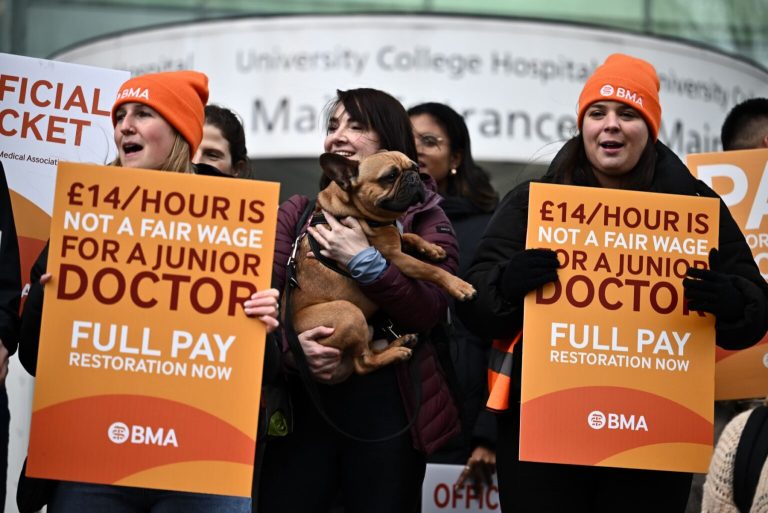


In an increasingly acrimonious conflict with the government over wages and employment, doctors in England went on strike on Tuesday for the fifteenth time in just over three years.
Following earlier strikes, resident physicians—those below the consultant level—secured a 28.9 percent raise over a three-year period, which led to their six-day walkout.
The medics’ demand for an additional significant salary increase to make up for what they claim is a real-time loss of revenue owing to inflation has put the government and resident physicians at a standstill.
In the midst of a persistent cost-of-living problem, Health Minister Wes Streeting denounced the doctors’ union’s decision to reject the government’s most recent offer of 4.9%.
The doctors were the “standout winners of the entire public sector workforce when it comes to pay rises,” according to Streeting, who spoke on BBC television.
He stated that the halt would cost the state-funded National Health Service £300 million ($3.9 million) and accused the union of hastily going on strike despite the prior “whopping” wage increase.
The doctors’ representative, the British Medical Association (BMA), is calling for a complete return to 2008 wages.
The UK government has stated time and time again that their requests cannot be met given the state of the economy.
The doctors’ union’s demand that UK-trained medical professionals be given preference for training positions over applicants from other countries has already been accepted by Streeting.
AFP
About The Author