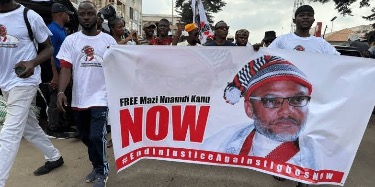


A scheduled demonstration, the ‘Free Nnamdi Kanu Protest’, led by former presidential candidate Omoyele Sowore of the African Action Congress (AAC), took place on Monday in the Federal Capital Territory (FCT). Sowore’s original plan was to mobilize Nigerians to march to the Presidential Villa in Abuja to demand the release of Kanu.
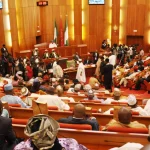
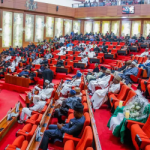
A judicial order issued on October 17, 2025, by Justice M.G. Umar in Suit No. FHC/ABJ/CS/2202/2025, barred Sowore and all associated groups from staging protests for Kanu’s release in specific FCT areas. These restricted zones included Aso Rock Villa, the National Assembly Complex, Force Headquarters, the Court of Appeal, Eagle Square, and Shehu Shagari Way.
In compliance with the ruling, the Nigeria Police Force barricaded all access roads to these areas, which prevented the initial plan from succeeding. The police also used tear gas canisters to deter potential protesters and commuters from using the roads. Despite these measures, Sowore and the demonstrators continued their protest in other parts of Abuja, specifically the Utako and Apo areas.
During the demonstration, the police arrested several individuals, including Kanu’s brother, Prince Emmanuel, his Special Counsel, Aloy Ejimakor, and other protesters. They were detained at the FCT Command CID, subsequently charged to court, and remanded at Kuje Prison by a magistrate court.
Anthony Sani, former Secretary of the Arewa Consultative Forum (ACF), criticized the protest as “counter-productive” and detrimental to the rule of law. He argued that since Nnamdi Kanu is standing trial for serious charges like terrorism and secession, the proper course of action is to allow the law to run its course. Sani stated that for Kanu’s lawyers to join the protest demonstrates a lack of faith in the rule of law. He insisted that a forceful release would not resolve the matter, as Nigerians deserve to know whether Kanu committed the alleged offenses.
Abuja-based human rights lawyer, Maduabuchi Idam, hailed the protest as a “massive success,” despite police attempts to suppress it. Idam claimed the protest successfully echoed the “collective disillusionment against the selective injustice” faced by Kanu and Biafra agitators. He highlighted that, for the first time in the history of the Biafra agitation, prominent Nigerians from different ethnic backgrounds openly supported Kanu and his struggle. Countering calls for sanctions against Kanu’s legal team, Idam argued that Ejimakor, as an Igbo man, Nigerian, and lawyer, has a constitutional right to express his opinion on national issues, provided he doesn’t pass judgment on pending court matters. Idam maintained that the protest will “continue to have a positive impact” and urged the state to “act wisely and release him forthwith” instead of trying to find people to sanction.
Residents in the South-East states of Abia, Imo, Enugu, and Ebonyi observed a sit-at-home to show solidarity with the protest held in Abuja, resulting in deserted streets across the region.
About The Author