
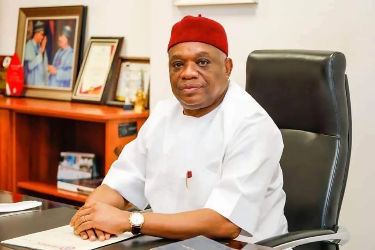


Abia North Senator, Orji Uzor Kalu, recently disclosed details of his private meetings with the late General Chukwuemeka Odumegu Ojukwu, the initial leader of the Biafra movement, toward the end of Ojukwu’s life.
During a Sunday interview on Arise Television (monitored by DAILY POST), Uzor Kalu shared that Ojukwu had confided in him, expressing that while the first attempt at Biafra was essential, the current, second movement is unwarranted.
Kalu also took the opportunity to dismiss claims that he is less of an Igbo person compared to others in the Southeast region.
He confirmed his deep Igbo heritage, stating, “I am a full-blooded Igbo,” and highlighted his close relationship with Ojukwu. He said Ojukwu’s wife, Mrs. Bianca Ojukwu, could verify that he frequently visited the General, and Ojukwu himself often visited his village for extended stays or weekends.
Kalu then reiterated Ojukwu’s view that the initial push for Biafra was necessary, but the second one is no longer required.
The Senator condemned the violence associated with the current movement, questioning the goal: “If these young men seek Biafra, who will be left to govern when they are killing their own people, preventing all Igbos from doing business?” He specifically pointed out the irrationality of attacking and killing people attempting to conduct business on Mondays.
Kalu suggested that in light of Nnamdi Kanu’s situation, the agitators should abandon violence and pursue a political resolution through dialogue. Instead of maintaining a defiant posture, he advised: “I believe that if they still desire Biafra, they should put down their weapons, use their flags, and request a referendum through negotiation and discussion.”
He concluded by stressing the importance of ending the destruction in the Southeast, noting that Bianca Ojukwu, having known her husband’s mind, holds a similar position against the ruin of Igbo land. He urged: “We must stop destroying ourselves, our assets, and our possessions. Commerce has ceased entirely across Igbo land. How are people expected to survive? Life is extremely difficult for residents there. These are the crucial problems.”
About The Author