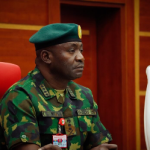



A new biography about former President Muhammadu Buhari, titled From Soldier to Statesman: The Legacy of Muhammadu Buhari, explains his refusal to publicly endorse a successor before the 2022 All Progressives Congress presidential primary election. The 600-page book, written by Dr. Charles Omole, Director General of the Institute for Police and Security Policy Research, was unveiled in Abuja on Monday. At the event, the former Director General of the Department of State Services, Yusuf Bichi, provided further details about Buhari’s actions during the intense period of succession. Bichi revealed that Buhari intentionally avoided naming an heir because intelligence reports indicated it could have endangered that person’s life and caused greater fragmentation within the ruling APC party. Bichi stated that many incorrectly viewed Buhari’s silence as indifference, but it was actually a carefully considered security measure. He explained that during those months, the political atmosphere was extremely volatile, sometimes literally dangerous, and naming an endorsed successor would have created a physical target for the individual while shutting down a necessary, albeit flawed, process designed to spread risk. Bichi argued that Buhari accepted criticism for appearing distant in order to protect an individual’s life and maintain a delicate stability within a party whose factions were poised to either destroy the party or seize the nomination they desired. He emphasized that the President prioritized protecting lives and ensuring stability for both the party and the nation over avoiding public disapproval. Additionally, Bichi clarified why Buhari did not reverse the decision made by then-Acting President Yemi Osinbajo to remove Lawal Daura as the DSS Director General while Buhari was away on medical leave. According to Bichi, Buhari believed that overturning the decision would weaken the Acting President’s authority and damage institutional stability. He stated that since Buhari had legally delegated authority to his Vice President, any attempt to countermand that action would be detrimental to institutional order, be seen as an insult to his Vice President, and threaten the chain of command. Bichi also disclosed that Buhari resisted political pressure to personalize governance, even when it involved allies, noting that the removal of Lawal Daura was one of the first major challenges to Buhari’s self-restraint, yet he refused to interfere despite pressure to reverse the decision. The former DSS boss characterized Buhari as a highly disciplined leader who valued concrete evidence, professionalism, and restraint over political spectacle, consistently challenging security chiefs by asking, “Where is your proof?” and refusing to act on mere rumors or unsubstantiated claims. Bichi concluded that this approach enabled security agencies to operate professionally while remaining accountable, reinforcing Buhari’s fundamental belief that public office is a trust, not a personal privilege. The book launch at the Presidential Villa was attended by President Tinubu, Gambian President Adama Barrow, state governors, ministers, diplomats, traditional rulers, and members of Buhari’s family.
About The Author