
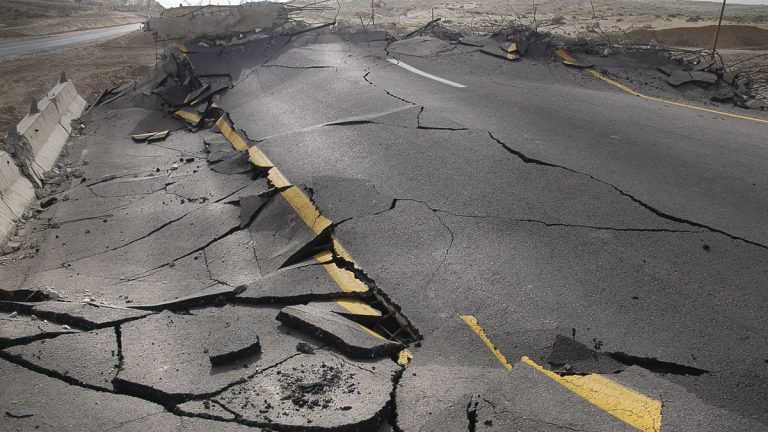


Nigeria’s vulnerability to earthquake-related damage has drawn criticism from the Nigerian Institution of Structural Engineers, which has identified major towns like Lagos, Ibadan, Abeokuta, and Benin City as possibly at risk.
Olushola Sanni, a former president of the organization, issued the warning, pointing out that many buildings nationwide were built without proper engineering supervision or seismic force consideration.
In order to demonstrate how earthquake vibrations may travel great distances—sometimes hundreds of kilometers—and cause devastation and widespread fear even in places far from the epicenter, he cited recent events around the world.
Sanni clarified that even though Nigeria is typically categorized as a low seismic-risk area, earthquakes can nevertheless occur there. He cautioned against being complacent because there haven’t been any significant earthquakes recently.
He claims that the majority of buildings in the nation are not made to resist seismic activity, putting locals at risk.
He revealed that the organization plans to implement new criteria for earthquake-resistant building design in Lagos on April 16, 2026, in order to close this gap.
According to him, the framework aims to bring Nigeria’s construction methods into compliance with international safety regulations.
“Distance from the source does not ensure protection, since earthquakes do not recognize geographical boundaries. “There shouldn’t be a false sense of security because there haven’t been any recent seismic events,” Sanni said.
He emphasized that geological formations along the coastline of West Africa transcend state boundaries by pointing out that neighboring Ghana has seen multiple earthquakes, especially in the vicinity of Accra.
He clarified that this implies that regions of southwest Nigeria may be affected by seismic activity from that area.
Sanni further cautioned that if seismic waves reach places like Lagos, Ibadan, Abeokuta, and Benin City that are located on fragile soil formations, they may experience increased ground shaking.
Therefore, he urged stakeholders to prioritize structural safety in building design and advocated for the implementation of earthquake-resistant construction practices.
He claims that the proposed principles will promote global best practices while streamlining procedures for engineers. Strong structural connections, balanced designs, and sufficient reinforcement detailing are all necessary for safer structures, he continued.
About The Author