
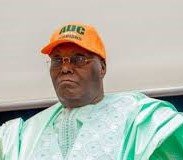


The Great Nigeria People’s Party (GNPP) leader and presidential candidate, the late Alhaji (Uncle) Waziri Ibrahim, famously ran on the platform of “Politics Without Bitterness.” Nigerians of all ages and geographical backgrounds were captivated by the slogan. Instead of animosity, blame, and retaliation, it suggested the promise of a politics rooted in decency, politeness, temperance, and service. It was more than just a catchphrase for a campaign; it was a political philosophy, a moral plea, and an urge to rethink administration as stewardship rather than conflict.
The late Alhaji Waziri Ibrahim represented a unique strain in Nigeria’s political development throughout the Second Republic, making him more than just a politician of his era. In a political climate already characterized by fierce rivalry, regional alliances, and ideological division, he stood out as the GNPP’s leader. His demand for “politics without bitterness” was not accidental nor naive. It stemmed from a conscious attempt to curb the excesses of political rivalry and foster an engagement culture that upheld national unity and dignity.
Waziri Ibrahim was a member of the generation of leaders that attempted to bridge gaps despite working within the limitations of Nigeria’s intricate federal structure. His politics, like all politics, were not without ambition, but they were tempered by decorum, moderation, and an understanding of the fine balance needed to keep a varied nation united. This attitude manifested itself in his actions and was not only rhetorical. Alhaji Waziri Ibrahim was supposed to speak to a sizable crowd of supporters during a campaign trip to Nguru in modern-day Yobe State in April 1983.
He received a message on the day of the demonstration informing him of the passing of Mallam Aminu Kano, the leader of the People’s Redemption Party (PRP). The decision to call off the rally was made immediately after a quick deliberation. Such a moment of national grief, according to Waziri Ibrahim, went beyond political rivalry and called for a show of togetherness and respect. He went straight from Nguru to Hadejia and then to Kano to attend Mallam Aminu Kano’s burial. In that one act, he upheld a value that is currently severely absent in our political culture: even in competition, there must be boundaries; rivalry cannot eradicate humanity; and the ties of the national community must triumph over the desires of partisan advantage.
Waziri Ibrahim tried to show that disagreement need not turn into animosity and that contestation could live with mutual respect during a time when political rivalry was already becoming more intense. In addition to being a politician, Waziri Ibrahim is a scion of a prestigious Kanuri family that is firmly anchored in the Borno heritage of respect, tolerance, and shared responsibility for the welfare of society. His perspective on leadership as a duty owed to the community rather than a luxury to be used for personal or sectional advantage seemed to be influenced by this tradition, which was fashioned by centuries of organized political power and social discipline.
His experience as a prosperous multinational company further shaped his admiration for planning, negotiating, and reducing conflict in teamwork. He appeared to view politics as a business endeavor in which conflicting interests must be carefully controlled and coordinated in order to achieve greater objectives of national development and unity rather than just as a struggle for power. His recognition that Nigeria’s existence rested not only on institutional design and constitutional arrangements but also on the behavior of its elite was what set him apart.
Perhaps more than many of his contemporaries, Waziri Ibrahim understood that when political actors embrace extreme stances and give up on moderation, they put not only their opponents but the system itself in jeopardy. Therefore, his message was both a warning and a desire that politics could quickly become a force of division rather than unification if it were not restrained by standards of civility and accountability. In light of this, the state of Nigerian politics today seems not just unsatisfactory but also significantly different from the ideals that former leaders like Mallam Aminu Kano and Waziri Ibrahim had envisioned.
The expression “politics without bitterness” is still relevant more than 40 years later, but primarily as an unmet hope. Nigerian politics are still fiercely competitive, acrimonious, and often polarizing. Political disputes frequently turn into personal animosity, and elections are frequently presented as existential fights. The Nigerian elite, the class that controls governance, controls economic resources, and determines the country’s course, has found it difficult to break free from the limits of tribe, region, and religion, which is one of the key reasons why the promise of politics without resentment has remained elusive.
Since gaining independence, Nigeria’s political path has alternated between optimism and disillusionment. There has never been a lack of rhetoric about togetherness, national integration, and collective advancement. However, governance has all too frequently turned into a rivalry and ambition theater. With great promise, the Nigerian elite was created in the furnace of colonial amalgamation and schooled at the nexus of Western modernity and indigenous tradition. It was anticipated that they would develop into a national class capable of creating a common vision for a multicultural nation. Rather, the elite progressively withdrew into the exact localized communities they were supposed to leave behind.
Nigeria’s political leadership in the first years following independence was shaped by nationalist pioneers who were committed to overthrowing colonial rule and creating a contemporary nation-state. The fight for liberation gave those early leaders legitimacy. However, as the years went by, waves of military leaders, civilian politicians, technocrats, and commercial tycoons changed the nature and intent of elite authority. Over time, governance lost its primary role as a means of advancing national development. Rather, it turned into a tool for maintaining established interests, solidifying power, and spreading patronage.
The way elections are conducted is one area where this change is most noticeable. Politics in modern Nigeria is becoming more and more like a marketplace where influence, income, and prestige are determined by one’s ability to access governmental authority. Elections are contested more as a means of gaining control over public resources and for personal prosperity than as chances for service. Defections, litigation, opportunistic alliances, and the lingering legacy of do-or-die politics drown out the vocabulary of politics without resentment.
This change has had dire repercussions. The Nigerian state has long been characterized by corruption, shoddy institutions, insecurity, and poor economic management. Citizens turn to ethnic, religious, and regional solidarity and sentiments for identity and safety after being continuously let down by governance shortcomings. They further undermine the national project by doing this. A crisis of legitimacy results, where the state is viewed as the property of whichever group is in power at any given time rather than as a shared trust. The incapacity of the Nigerian elite to rise above the ethnic, regional, and tribal foundations from which they originated is at the core of this dilemma.
About The Author