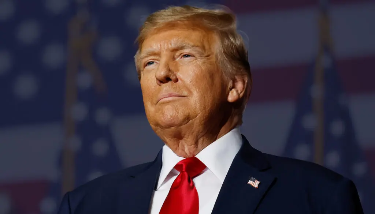


Outspoken public affairs commentator, Mahdi Shehu, stated that US President Donald Trump’s recent threat to launch military action against Islamic terrorists in Nigeria has caused escalating fear and tension across Northern Nigeria. Shehu claimed this anxiety is particularly high among Muslims in the North, who perceive Trump’s statements as reckless, biased, and deliberately targeted. He said many Muslims view Trump’s threats as an extension of his long-standing hostility toward Islam and Muslims, believing the war-mongering has a hidden agenda. Shehu insisted that religion is a matter of heritage, not a consumer choice, and warned Trump against risking a broader global conflict that would lead to uncontrolled chaos and confusion. Conversely, Shehu observed that many Christians have welcomed Trump’s comments, attributing this to their belief in the narrative of a Christian genocide in Nigeria, a narrative he described as one-sided and misleading. He cautioned those celebrating the threat, warning that an attack would result in numerous casualties among both innocent Christians and Muslims. He criticized religious figures who profit from promoting the Christian genocide narrative, asserting that Nigerians would not simply watch Trump destroy the country and create 200 million refugees. He urged Nigerians to remain calm, focused, and prayerful, referencing a Quranic verse to encourage reliance on God during fear.
The Country Director of the International Human Rights Commission (IHRC) and a Retired Army Captain, Bokaji Adamu, warned that Donald Trump’s threat could worsen insecurity across the Lake Chad region if not handled carefully. Adamu described Trump’s talk of a full-scale invasion as a political and pressure tactic, deeming a direct invasion highly improbable due to likely strong political, legal, and regional opposition from groups like ECOWAS, the AU, and the UN. He suggested that limited military actions remain a realistic possibility, such as targeted airstrikes or a temporary suspension of US aid and security cooperation. Adamu warned that unilateral US action could disrupt vital intelligence sharing and military collaboration, potentially causing Nigeria to react defensively, citing national pride. He cautioned that uncoordinated foreign strikes could cause civilian casualties, fueling anger against both the Nigerian government and the US, which in turn could help extremist groups attract new recruits under the propaganda that Islam is under attack by the West. He also warned that increased pressure might push insurgents into neighboring countries (Niger, Cameroon, Chad), spreading the violence regionally. Adamu advised the Nigerian federal government to insist on transparent, legal cooperation aligned with international law and coordinated via the African Union and the United Nations. He also stressed the importance of protecting humanitarian aid, maintaining clear public communication to prevent panic, and making civilian protection a top priority in all security operations. Adamu assessed Trump’s statement as politically strong but militarily unrealistic, warning that if poorly managed, it could destabilize Nigeria and threaten regional security.
Halima Yusuf, a Kano resident, expressed concern that Trump’s statement makes it appear as if Muslims are being unfairly singled out as the issue, risking harm based on incorrect assumptions and creating unnecessary friction between Christians and Muslims.
About The Author